

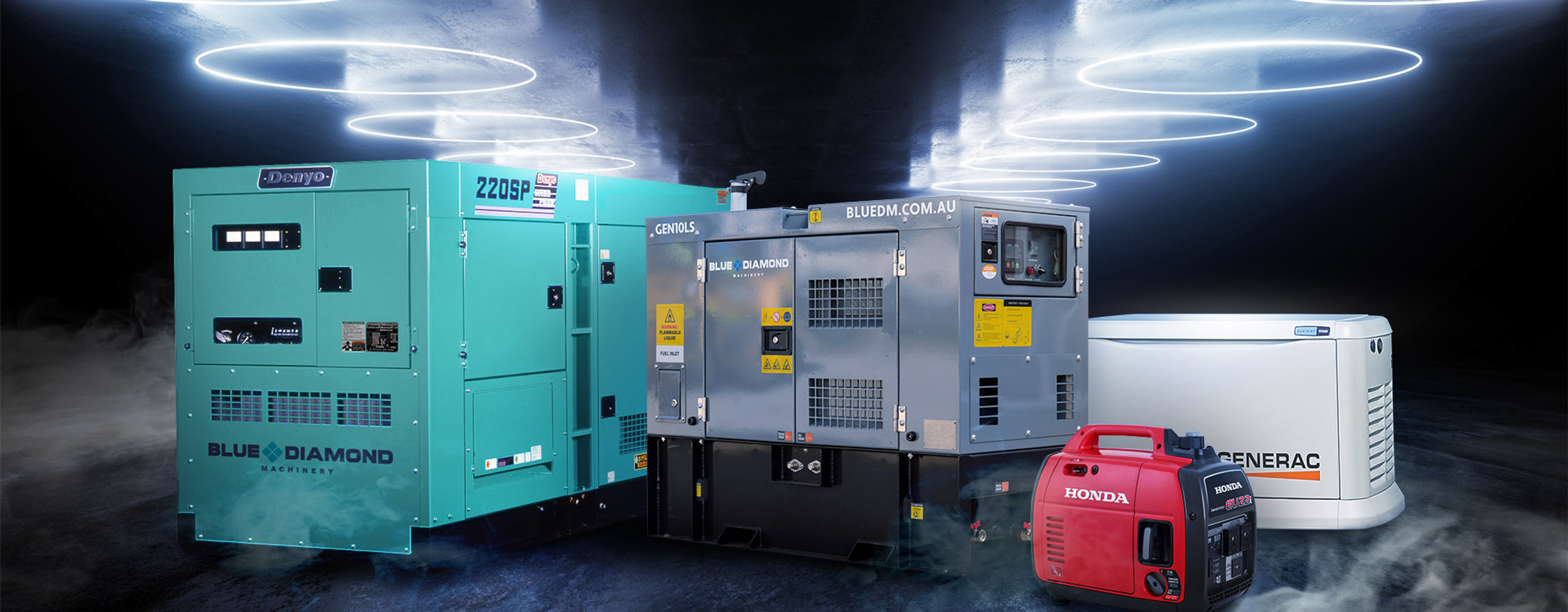
Generator Buyers Guide: Finding The Right One For The Job
30th Oct 2020
Whether you’re after a generator to power a camping trip or to support off-grid commercial business operations, understanding how to choose the right one for your needs is crucial.
Here, we’ll cover everything you need to know when looking for a generator to make an informed purchase decision.
What Size Generator Do You Need?
The first step when buying a generator is to understand what size generator is right for you. This will vary depending on the application, what you want to power and for how long.
To calculate your specific power requirements, create a list of all the appliances/machinery you want to power. Then, tally up the total running watts of all items and factor in the machine with the largest starting watts.
For machinery with electric motors or heating components, like table saws and welders, the starting wattage can be 3-4x the running watts.
Choose a generator that’s too small and you risk overheating the generator’s engine and alternator. Overestimate your power requirements and you risk underloading your generator, which can damage it, along with the machines it’s connected to.
Note: As a rule of thumb, look for a generator that supplies 20% more power than you need to account for power surges.
What Type Of Generator Do You Need?
Once you know your power output, you can look for a generator model to support it.
Your options include:
Portable & Inverter Generators
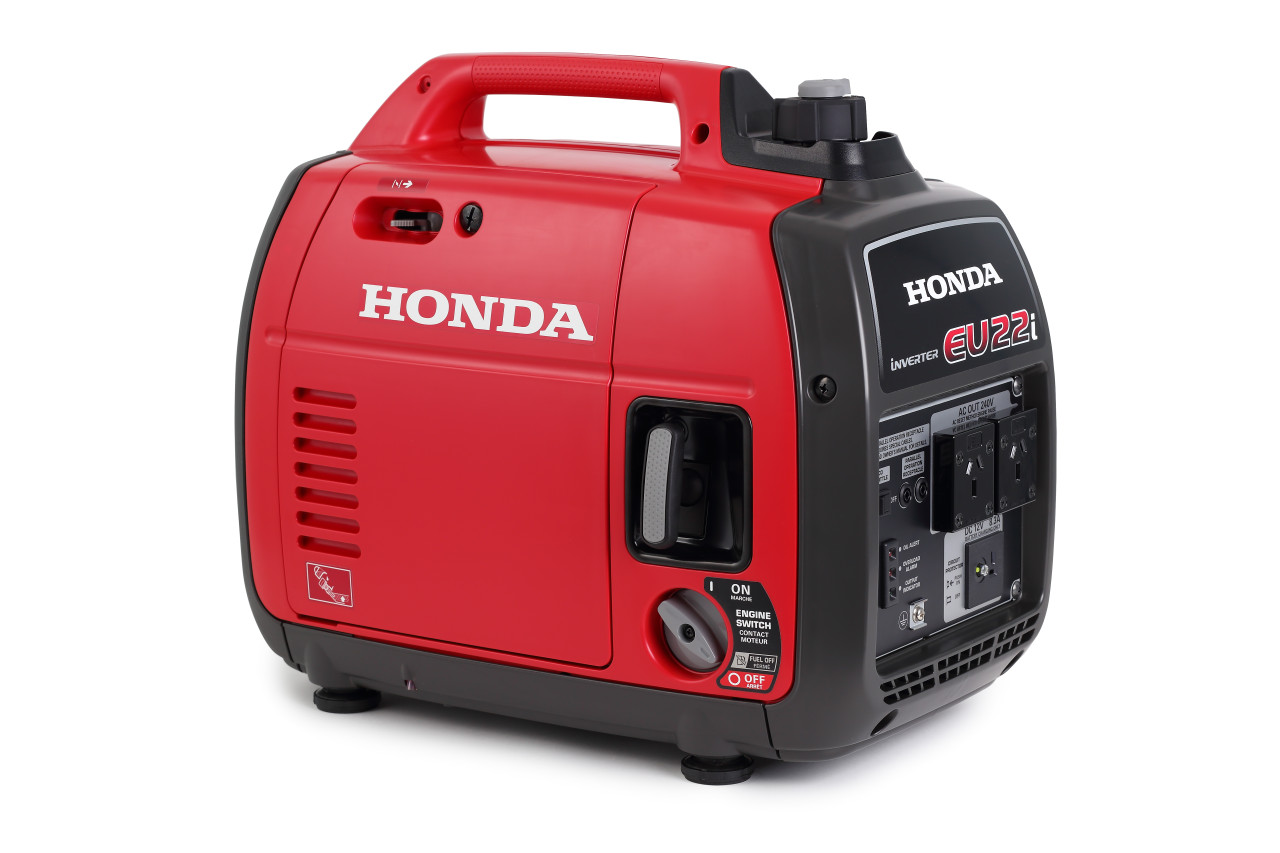
Portable generators are ideal for those seeking a high-quality, reliable and efficient source of mobile power. Their small, often lightweight design makes these generators popular for camping, caravanning and recreational use as well as for small work sites.
Most generators in our portable range are inverter generators. Inverter generators are noticeably quieter as they throttle up and down to match load demand rather than running at full power the entire time. They also run more efficiently and produce fewer emissions than standard portable generators.
Portable generators have applications for both trade site and residential uses, with the popular Honda EU22i and Genesys GEN2500i models well-suited to camping and caravanning power needs. More robust units like the Honda EU70is and Genesys GEN11000R are great for small trade sites and backing up essential items during a blackout.
Standby Generators
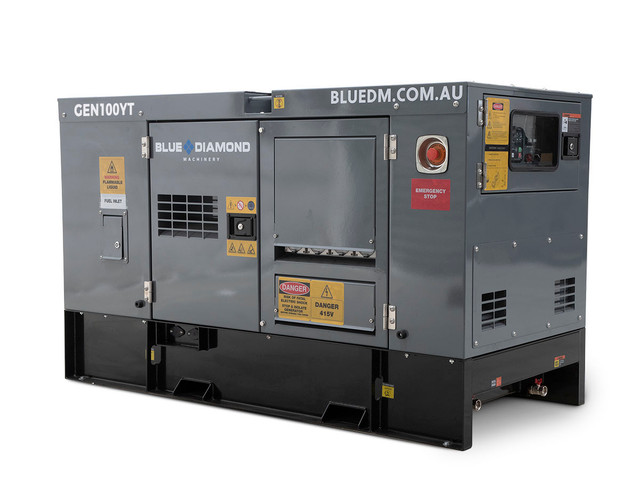
A standby generator is permanently installed to a home or business. If mains power is lost, they switch on automatically, ensuring an uninterrupted power supply. This makes them well-suited to emergency, commercial, industrial and agricultural applications that can’t afford to be offline.
Standby generators can be powered either by diesel fuel or through a connection to a natural gas line. Standby diesel generators like the Genesys GEN100YT, have generous run times up to 47 hours at 75% load. Gas powered standby generators, on the other hand, connect to a natural gas line and will continue to provide power as long as there is no interruption to the gas supply.
Prime Power/Industrial Generators
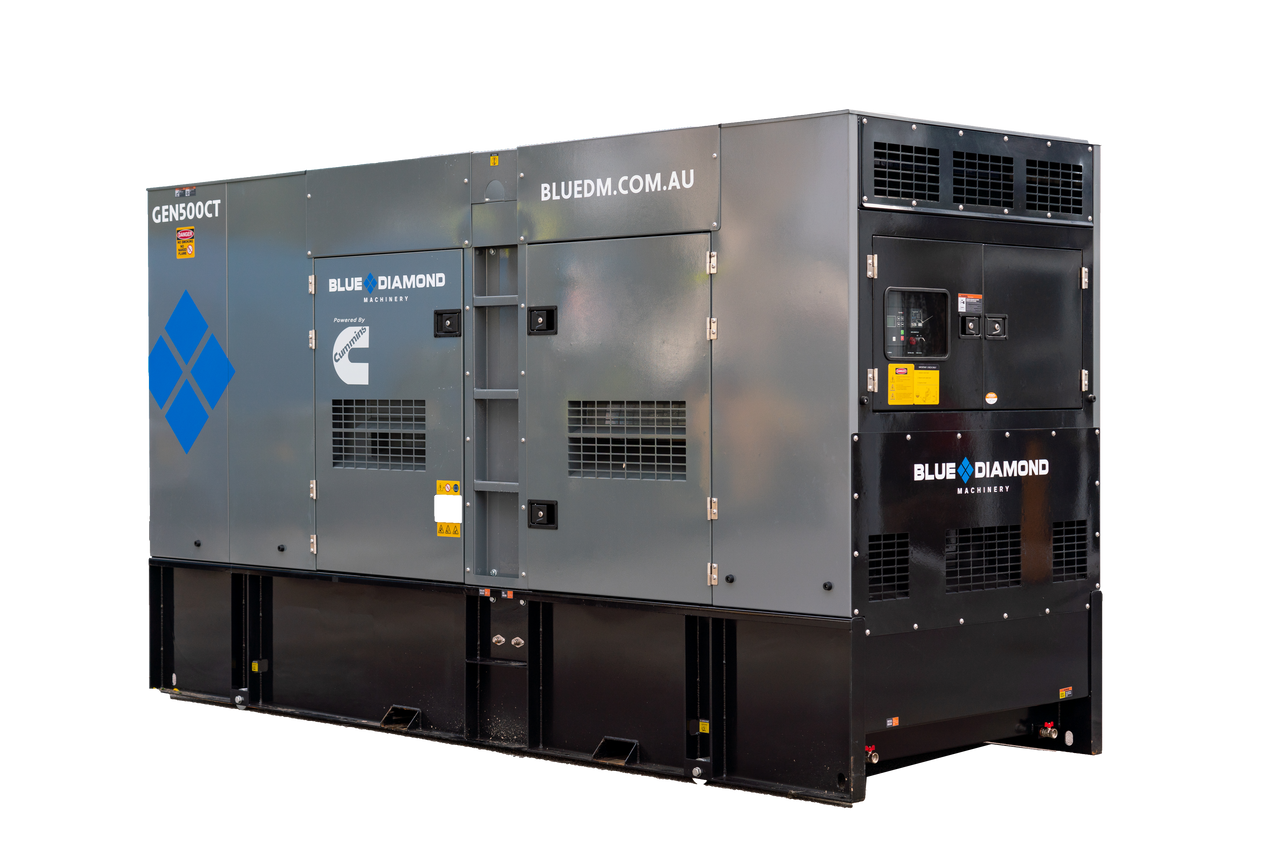
Prime power generators are well-suited to applications in need of intensive, constant power where access to the grid is limited or impossible.
Large stationary industrial diesel generators like the Perkins Powered GEN440PT and Kubota KJ-T180-AU-B operate on 3 phase power. Unlike single phase generators that only use one wire, 3 phase industrial generators use three wires to deliver power in three alternating currents.
The supply of power is constant and never drops below zero, making them suitable for powering large, demanding loads on off-grid agricultural, commercial and industrial job sites. 3 phase power is also more efficient, generating three times as much power as single phase generators.
Other Features To Consider
Noise Output
Think about where you plan to operate your generator and the noise restrictions that apply.
For example, caravan parks and recreational areas require generators operate at less than 65 dBA. In cities and urban areas, any generator that produces above 75 dBA may result in a large fine, especially if the generator is running over an extended period of time.
We also have a simple list of the quietest generators on the market.
Run Time
There’s no point investing in a generator if it doesn’t provide enough power to keep your operations running throughout the day.
For example, smaller models like the Genesys GEN10LS have an estimated run time of 29 hours at 75% load. Whereas larger models like the Genesys GEN77YT offer up to 47 hours of continuous operation at 75% load.
Even better, natural gas powered generators offer ‘virtually unlimited’ run times. They connect directly to your natural gas line, delivering a constant, cost-effective power connection as long as there is no interruption to the gas supply.
ATS Switch
Most larger model generators have the option to add an automatic transfer switch (ATS). The ATS allows your generator to switch automatically between mains power and standby/backup power when it detects a blackout or electrical emergency.
This is an essential feature for businesses that can’t afford to go offline, like those working with production lines, hospitals, security systems and refrigeration.
Safety Features
Mining and construction sites require generators fitted with extra safety features to protect both the user and the surrounding environment. Look out for generators fitted with:
- Overload protection
- Low oil shutdown
- Fire extinguisher
- Emergency stop button
- High-vis tape
- Flashing beacon
- Lockable battery isolator
Blue Diamond Machinery can also customise your generator to suit any application or site safety requirements.
Get The Right Advice, Contact Us Today
With years of experience, you can rely on Blue Diamond Machinery to provide the right advice and a generator to meet your unique requirements.
For more information on the best model to suit your power requirements, contact us today or speak to one of our expert team on 1300 998 647.